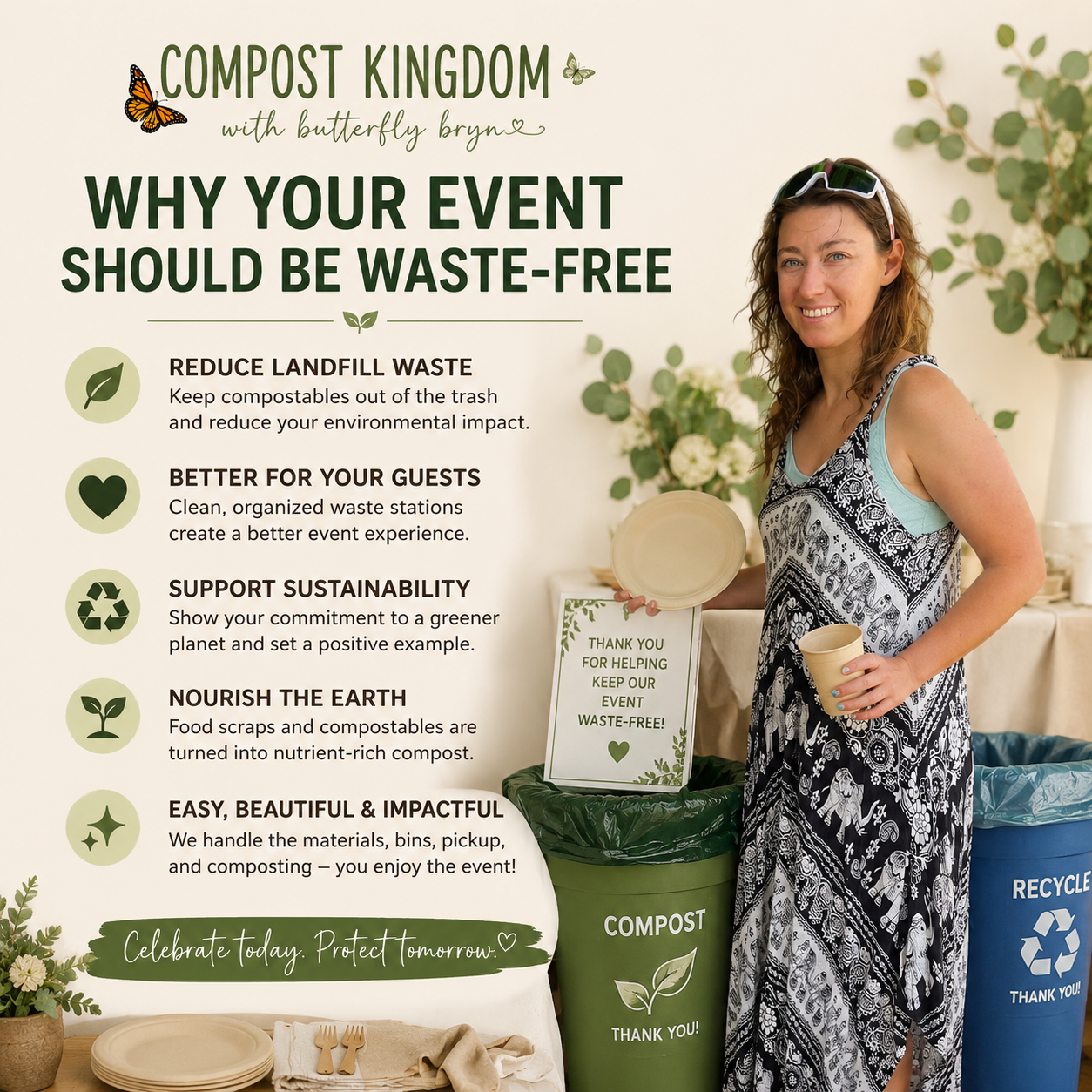
Why Your Next Event Should Be Waste-Free
Every event creates memories—but it can also create a surprising amount of waste.
From weddings and bridal showers to company parties, festivals, and community gatherings, disposable plates, cups, napkins, food scraps, and decorations can quickly fill dozens of trash bags. A waste-free event helps reduce that impact while creating a cleaner, more organized experience for guests.
At Compost Kingdom, we make it easier to celebrate without sending everything to the landfill.
Reduce Unnecessary Landfill Waste
Traditional event trash often includes food scraps and single-use items that could have been composted or recycled.
By using approved compostable plates, utensils, cups, and napkins, more of your event waste can be turned into useful compost instead of being buried in a landfill.
Keep Your Event Cleaner
Clearly labeled compost, recycling, and trash stations help guests understand where everything belongs.
Organized waste stations can reduce overflowing trash cans, loose litter, unpleasant smells, and messy cleanup areas. They also make your event look more professional and thoughtfully planned.
Make Sustainability Easy for Guests
Most guests want to make environmentally responsible choices, but confusing or poorly labeled bins make that difficult.
Compost Kingdom can provide:
Compostable plates, utensils, cups, and napkins
Compost and recycling collection bins
Compostable bin liners
Clear waste-sorting signs
Delivery and setup
Collection after the event
Sorting and contamination removal
Compost and optional recycling processing
Your guests simply follow the signs while our team handles the rest.
Support Your Company’s Sustainability Goals
For businesses and organizations, a waste-free event shows employees, customers, and community partners that sustainability is more than a slogan.
Event composting can support environmental goals, strengthen your brand image, and provide a visible example of responsible leadership.
It is also a great addition to employee gatherings, conferences, grand openings, fundraising events, and community celebrations.
Create a Better Guest Experience
A beautiful event should not end with piles of overflowing garbage.
Thoughtfully designed waste stations, compostable serviceware, and reliable pickup help maintain the look and atmosphere of your celebration from beginning to end.
Guests can enjoy the event knowing their plates, napkins, and food scraps are being handled responsibly.
Protect the Event From Contamination
Composting only works when the correct materials are collected.
After pickup, our team carefully checks and sorts the material to remove plastic wrappers, bottles, and other contaminants. This helps protect the compost stream and increases the chance that the material is processed properly.
A Small Change With a Big Impact
Choosing compostable products and responsible waste collection may seem like a small event detail, but it can significantly reduce the amount of material sent to the landfill.
Whether you are planning an intimate gathering or a large company event, Compost Kingdom can create a customized waste-free package based on your guest count, location, and event needs.
Celebrate With Less Waste
Your event can be beautiful, memorable, and better for the planet.
Compost Kingdom provides the compostable supplies, bins, signage, pickup, sorting, and processing needed to make waste-free events simple.
Ready to make your next event waste-free?
Visit CompostKingdom.com or contact Compost Kingdom for a customized event package.
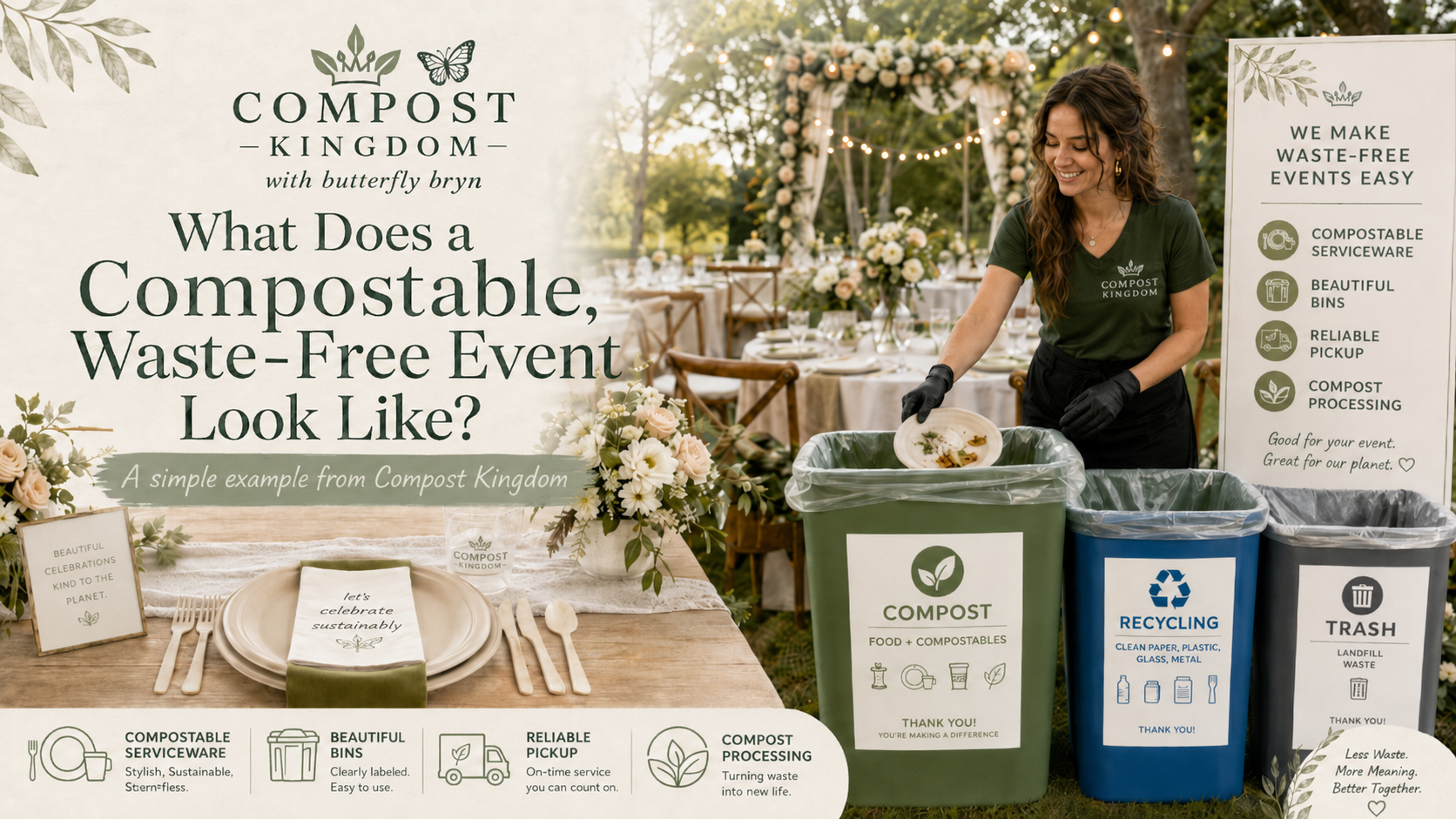
What Does a Compostable, Waste-Free Event Look Like?
Planning a wedding, bridal shower, company gathering, or community celebration should be exciting—not filled with questions about overflowing trash cans and where everything will end up.
At Compost Kingdom, we make waste-free events simple, organized, and beautiful. We provide the supplies, collection stations, cleanup, and responsible waste processing so you can focus on enjoying your event.
Before the Event
We help determine what your event needs based on the number of guests, the food being served, and the event location.
Depending on your package, we can provide:
Compostable plates, bowls, cups, and utensils
Compostable napkins and serving products
Clearly labeled compost and recycling bins
Compostable bin liners
Signs that help guests sort their waste correctly
Delivery and setup of event materials
Everything is planned ahead of time so your waste stations are easy to find, easy to understand, and cute enough to fit into your event.
During the Event
Guests place food scraps, napkins, plates, and other approved compostable materials into the designated compost bins. Recycling can be collected separately when requested.
For larger events, our trained Green Team can also help guests use the correct bins and keep the waste stations clean throughout the celebration.
After the Event
When the party is over, Compost Kingdom collects the bins and hauls away the compostable material.
Our team carefully sorts through the collected materials to remove contamination such as plastic wrappers, bottles, or other trash. This extra step helps ensure that the compost is clean and processed correctly instead of being rejected or sent to a landfill.
Recycling pickup and sorting may also be added to your event package.
Example: A 300-Guest Bridal Shower
A sample package could include:
300 compostable plates
300 compostable utensil sets
300 compostable napkins
Three compost collection bins
Compostable bin liners and signage
Delivery and event setup
Compost pickup, sorting, and processing
Example package price: $695
Optional recycling collection could be added for approximately $125, depending on the location and amount of material.
Pricing is customized based on guest count, supplies, staffing, travel, event length, and the number of collection stations required.
Celebrate Today. Protect Tomorrow.
A waste-free event does not have to be complicated. Compost Kingdom brings everything together—from the first plate to the final compost pickup—so your celebration can create happy memories without leaving behind bags of unnecessary waste.
Whether you are planning an intimate bridal shower or a large company event, we are ready to help make it cleaner, greener, and fit for royalty.
Ready to plan your compostable event?
Contact Compost Kingdom at ECO@CompostKingdom.com, call or text 303-246-1776.

Climate Con 2026 February 2
🌱🌎Bringing People Together is such an enjoyable experience! Plus for plants and the planet is even better so I want to welcome YOU and introduce my mentor and Friend…
BEST ClimateCon! Ever?!
This is such an amazing lineup of events, I don't have the words! Decide for yourself:
The Best Alternative to Hydrogen
Legitimacy of Carbon Offsets
Sustainable Purchasing and Creating an Environmentally Preferable Purchasing Plan
Buildings: Cradle to Cradle
Sustainable Air Fuels
Transportation Demand Management and Commute Behavior Change
Hydrogen Cars In Colorado
Necessary Activism For Climate Success
Climate Fresk Game Session
Workforce Development
Eco Landscaping
Building Efficiency Solutions
How Businesses Can Impact Change
Re-branding Heat Pumps
and more!
The list of moderators for those panels is just as impressive: Scott Milne, Tom Thompkins, Justin Sharer, Matthew Lumino, Sarah Currie-Halpern, Josh McIlwain, David Fridland, Moatassem Abdallah, Brian DeBruine, Brian Hewlett, Rafael Monge, Shelby Sack, Giselle Uribe and Natalia Eckberg.
And we'll be announcing the Keynote Speaker tomorrow.
ClimateCon! is February 2 at the Lowry Conference Center. Secure your seats today, seating is limited at the LCC.
Here's a flier for the Feb 2nd ClimateCon!, thanks in advance for any help promoting this event!
Keep being awesome!
Michael
Mini Goats and Compost Kingdom Will be attending Climate Bringing sustainable food.
Stump Grinding: Why Removing Old Tree Stumps Matters
Tree stumps might seem harmless at first, but leaving them behind can cause more problems than most property owners expect. Stump grinding is the safest, cleanest, and most effective way to fully remove a stump without damaging your yard or surrounding landscape.
What Is Stump Grinding?
Stump grinding is the process of using a specialized machine to grind a tree stump down below ground level. Instead of ripping out the roots—which can tear up soil, irrigation lines, and nearby plants—the grinder slowly chips the stump into wood mulch.
The result is a smooth, level surface that’s ready for grass, landscaping, or new planting
Compost Christmas: Saint Nicholas Brings Soil, Coal
This Christmas, Saint Nicholas is delivering compost—not coal. At Compost Kingdom, we turn holiday waste into something truly magical: healthy soil.
We offer large compost and Christmas tree pickup services across Colorado, proudly serving communities from Boulder through Denver and all the way down to Castle Rock. Whether it’s holiday food scraps, event compost, or Christmas trees, we make sure nothing valuable goes to waste.
🌲 Where Do Your Christmas Trees Go?
Here’s the fun part: our goats eat the Christmas trees 🐐🎄
Instead of sending trees to a landfill or chipping facility, they’re naturally recycled through goat grazing. The result? Nutrients returned to the soil in a closed-loop, regenerative cycle—just the way nature intended.
♻️ A Simple, Sustainable Holiday Choice
Compost Christmas is about making it easy:
Food scraps become compost
Christmas trees become goat feed
Waste becomes soil
And the earth gets healthier
Saint Nicholas would approve.
This year, skip the landfill.
Choose compost. Choose regeneration.
From Boulder to Castle Rock, Compost Kingdom has your holiday cleanup covered 🌱

Why We Use the Grapevine
Ever wonder where “heard it through the grapevine” comes from? In the 1800s, tangled telegraph lines looked like grapevines, and news spread fast—person to person, informal, organic.
That’s why Compost Kingdom uses the grapevine.
Grapevines are deep-rooted, resilient, and interconnected—just like composting and community. Compost works through underground networks of microbes and life, turning waste into soil. Change works the same way: shared locally, grown naturally, and passed along by people who care.
When you compost, host a zero-waste event, or tell a friend about us, you are the grapevine—spreading sustainability one conversation at a time.
Thanks for helping the message grow
🗽 Butterfly Bryn + Eco Niko in New York
Dec 18
Exploring sustainability in the city that never sleeps 🌿
💚 An Eco Adventure in the Big Apple
Our visit to New York City wasn’t just about Family trip — it was about discovering how sustainability fits into even the busiest cities. At the Club Wyndham Hotel, we were delighted to find compostable coffee cups, plates, and utensils, making it easy to travel light on waste while still enjoying every moment.
🪴 Composting Made Easy (Even on Vacation!)
In our cozy kitchen space, we kept a small compost bin, and it quickly became one of our favorite parts of the stay. Whether it was coffee grounds or apple cores, it all went into our little bin — just like home. The best part? There was a compost drop-off just a few blocks away!
If hotels like Wyndham expanded their efforts with in-building compost systems, it would make it effortless for guests to join in the eco mission.
🌱 Butterfly Bryn’s Tip: Keep It Simple
“It felt amazing to have a compost bin in our hotel kitchen. It’s like bringing a piece of our eco routine wherever we go!” — Butterfly Bryn
🌍 Eco Niko’s Picks for Greener Travel
To make composting travel-friendly and mess-free, here are two essentials we used (and now can’t live without):
These make it simple for families and hotels alike to take small steps toward zero waste.
☕ Why Sustainability Belongs in Hospitality
By embracing compostable materials and zero-waste systems, hotels like Club Wyndham can attract a growing number of eco-conscious travelers. Guests love knowing they’re part of something positive — and that sustainability doesn’t have to mean sacrifice.
When travel feels both comfortable and kind to the planet, that’s a trip worth remembering. 💫
What Is a Compostable Event or Party?
A compostable event or party is one where waste is designed to return to the Earth instead of ending up in a landfill. That means food scraps, plates, cups, napkins, and utensils are composted — not trashed.
Most traditional events rely on single-use plastics and styrofoam that stick around for decades. Compostable events flip that model by using plant-based or paper products and providing clear compost, recycling, and landfill stations so guests know exactly what to do.
When organic materials are composted, they become nutrient-rich soil instead of producing methane in a landfill. The result? Less waste, healthier soil, and a smaller environmental footprint — without sacrificing the fun or style of your event.
At Compost Kingdom, we make compostable events simple. We provide the bins, signage, collection, and proper composting so you can focus on celebrating.
Choosing a compostable event is a small change that makes a big impact — for your guests, your community, and the planet.
Spreading the Word About Composting in Our Community
At Compost Kingdom, alongside Butterfly Bryn, our mission goes beyond waste collection. We’re here to spread awareness about why composting matters and to make it easy for our community to take part in real, impactful change.
That’s why we provide free compost buckets to get people started and offer $15 per pickup, keeping composting affordable and accessible for households, events, and small businesses.
We also know trust matters. Many people worry that their compost still ends up in the trash. With Compost Kingdom, you can feel confident knowing your food scraps are actually getting composted and turned back into healthy soil, not sent to a landfill.
Through local events, conversations, and hands-on education, Compost Kingdom and Butterfly Bryn are helping normalize composting and showing how small actions can create big environmental impact.
One bucket at a time, we’re building healthier soil, stronger communities, and a more sustainable future.

Incase you would like to drop off your organic waste instead of having us come Pick it up here is a FREE drop off site! The Douglas County Slash/Mulch program provides a drop-off site for tree limbs, shrubs, and other yard waste to reduce fire risk and promote recycling. Located in Castle Rock, it operates on Saturdays from April through October, weather permitting. The site offers free wood chips for mulching and has specific guidelines for what can and cannot be accepted. Unacceptable items include appliances, trash, and certain plant materials like grass or leaves. This initiative not only helps in managing yard waste but also in fire prevention and environmental conservation. For more detailed information, visit the official website (Douglas County).

The Basics of Building Your Compost Pile: A Beginner's Guide
Welcome to Compost Kingdom!
In the heart of every garden, a kingdom thrives, ruled not by kings or queens, but by the cycle of life itself. Welcome to Compost Kingdom, your ultimate guide to transforming kitchen scraps and yard waste into black gold for your garden. Here, we embark on a journey to demystify the art and science of composting, turning waste into wonder and cultivating a greener world, one compost pile at a time.
Latest Blog Posts
"The Basics of Building Your Compost Pile: A Beginner's Guide"
Embark on your composting journey with a step-by-step guide to setting up your first compost pile. Discover what to compost, the perfect balance between greens and browns, and how to maintain your pile for optimal decomposition.
"Worms: The Unsung Heroes of Our Compost Kingdom"
Dive into the world of vermicomposting and learn how these tiny creatures can turn your kitchen waste into nutrient-rich compost. This guide covers setting up your worm bin, feeding and caring for your worms, and harvesting worm castings.
"The Science of Composting: What Happens Inside Your Pile?"
Explore the microscopic universe inside your compost pile, where bacteria, fungi, and other microorganisms break down organic matter. This post demystifies the composting process, explaining the stages of decomposition and how to harness them for better compost.
"Composting Myths Debunked: Separating Fact from Fiction"
Does composting attract pests? Is it too complicated or time-consuming? We debunk common composting myths and provide practical tips for successful composting, regardless of space or experience level.
"Creative Composting: Unconventional Methods to Try at Home"
From bokashi to trench composting, explore innovative and space-saving composting methods that fit your lifestyle and space. This post is perfect for urban dwellers or anyone looking to experiment with new composting techniques.
Compost Kingdom Chronicles
Join us as we share stories from our community of composters. From balcony composting adventures in the city to large-scale composting operations in rural gardens, these tales of triumph and trial inspire and connect us all.
Tips & Tricks
Quick and easy composting tips to troubleshoot common issues, optimize your composting process, and enhance the quality of your compost. Whether you're a seasoned composter or just starting, there's always something new to learn.
Resources
Composting Guides & Tutorials: Step-by-step instructions, videos, and infographics to guide you through different composting methods.
Community Forum: Connect with fellow composters, share experiences, ask questions, and offer advice.
Product Reviews: Honest reviews of composting bins, tools, and accessories to help you make informed decisions.
Events & Workshops: Information on local composting workshops, webinars, and community events.
Join the Kingdom
Subscribe to our newsletter for the latest posts, exclusive tips, and updates from Compost Kingdom. Together, we can turn our waste into wealth and foster a more sustainable world. Welcome to the kingdom where waste becomes wonder, and every composter is royalty.
This blog outline blends informative content with a touch of whimsy, appealing to beginners and seasoned composters alike. The goal is to educate, engage, and inspire action towards more sustainable living practices.

South Denver’s Nature Savers
Saving Nature is as easy as putting it in the right bin
This is a quick Summary of your Compost Pickup options if you live in South Denver, including, Cherry Creek, Aurora, Parker, Littleton, and more which you can see below.
Compost pickup companies in South Denver doth serve a crucial role in assisting residents in managing organic waste effectively. Verily, these companies doth offer convenient services that do collect food scraps, yard waste, and other compostable materials from households, thus reducing the amount of waste that doth end up in landfills. By hiring a compost pickup service, residents in Parker can contribute to environmental sustainability whilst simplifying their waste management routine. These companies do play a vital role in promoting composting as a sustainable practice and do make it more accessible to a wider audience in the community.

If you Live in this area you have four possible options to Compost Pickup
Most likely you fall into two categories of compost pickup. First Residential and second commercial.
If you live in an apartment or house your best options for being sustainable with Compost pickup are; Compost Colorado, Wompost, Castle Rock Compost or you guested it Compost Kingdom which is your Most sustainable option as we have run our own composting facilites here in Parker rather than having to drive it out of our way to Composting Facilities like all the other Composters(Haulers) on this list do.
Second Businesses- in this case this pertains to any large tote compost Pickup. We partner with Compost Colorado to do larger regular pickups so we recommend them first. Wompost is the next best option. If you need Manuer, Landscaping waste or any other large trailer sized organics hauled off that is what we at Compost Kingdom Specialize in. Feel Free to fill out our form in the Bar above, spring us an email at Eco@compostkingdom.com text 303-246-1776 or leave a voice mail if you have any questions. We are here to help Save as much Nature as possible!

Sponsored The SAME Table Gala
Helped The SAME Table be the most sustainable event in Colorado by Composting.
Compost Kingdom played a significant role in the SAME Café Denver Gala by providing composting services, which helped the event significantly reduce its environmental impact. They offered comprehensive composting solutions for the organic waste generated during the gala, ensuring that hundreds of pounds of waste were not only diverted from landfills but also transformed into nutrient-rich compost. This process helps in sequestering carbon, contributing to soil health, and promoting sustainable agriculture practices. By partnering with Compost Kingdom, the SAME Café was able to underscore its commitment to sustainability and community health. You can find more about their services on their below.

The SAME Café in Denver is not just a café, but a vibrant community hub dedicated to providing healthy, locally-sourced meals for everyone, regardless of their ability to pay. The annual SAME Table Celebration is a particularly special event that embodies this mission, inviting diverse people and organizations to join in solidarity for a cause that sits at the intersection of community, sustainability, and a healthy food network. At this gala, the contributions of attendees and the support of various food and beverage sponsors come together to create a memorable evening filled with exquisite culinary delights, crafted by private chefs and the SAME Café team, and complemented by an array of beverages .
The evening is not just about enjoying food and drink; it’s also an opportunity to contribute to the café’s mission through silent and live auctions featuring unique experiences. The celebration is further enriched by the unveiling of community art, symbolizing the collective spirit and historical recognition of the local area .
SAME Café stands out as a pioneering nonprofit restaurant where guests can pay through volunteering time, providing produce, or monetary donations, aligning perfectly with their ethos that everyone deserves healthy food and dignified treatment.
This holistic approach to a dining experience not only nourishes the body but also strengthens community bonds and promotes the values of equity and sustainability. The successful turnout at the SAME Table event, with substantial funds raised, is a testament to the communal support and shared commitment to these ideals.
For those looking to engage with and support SAME Café’s ongoing efforts, there are many ways to get involved, from enjoying their menu offerings to participating in volunteer opportunities, thus fostering a robust community around food and social equity. Learn more about there website at https://www.samecafedenver.org/

Almost all the Compost bins where full and there was very little contamination!

Why Compost Matters
Compost Impacts, Environment, the economy, community and more.
Why Composting Matters
Composting is the process of recycling organic materials, such as food scraps and yard waste, into a rich soil amendment. It is a simple and effective way to reduce waste, improve soil health, and mitigate climate change. In this blog, we will explore the importance of composting and why it matters for individuals, communities, and the planet.
Environmental Benefits
Composting has significant environmental benefits that make it a crucial practice for sustainable living. When organic materials are sent to landfills, they undergo anaerobic decomposition, releasing methane, a potent greenhouse gas. By diverting these materials to composting instead, we can reduce methane emissions and lessen the burden on landfills.
Furthermore, compost acts as a natural fertilizer, enriching the soil with essential nutrients and improving its structure. This leads to healthier plants, increased biodiversity, and better water retention, ultimately contributing to the overall health of our ecosystems.

Birds Need Healthy Ecosystems
Waste Reduction
The amount of food waste generated globally is staggering, with millions of tons ending up in landfills each year. Through composting, organic matter is repurposed into a valuable resource rather than being discarded as trash. This not only reduces the volume of waste going to landfills but also decreases the production of harmful leachate, which can contaminate soil and water.
Climate Change Mitigation
In the fight against climate change, composting plays a vital role. By preventing organic matter from decomposing in landfills, we can significantly decrease the release of methane, a gas with a much higher warming potential than carbon dioxide. Additionally, healthy soils enriched with compost act as a carbon sink, sequestering carbon and offsetting greenhouse gas emissions.
Economic and Community Benefits
Composting can also bring about economic and community benefits. Municipalities that implement composting programs can save money on waste management and landfill costs. Community gardens and urban farms can use compost to improve soil fertility and food production, fostering local sustainability and food security.
How You Can Make a Difference
As an individual, you can contribute to the important cause of composting in several ways. Start with simple steps, such as setting up a small compost bin at home for food scraps and yard waste. Educate yourself and others about the benefits of composting, and support local initiatives that promote composting and organic waste diversion.
In conclusion, composting matters because it offers a sustainable solution to waste management, supports environmental conservation, and helps combat climate change. By embracing composting practices, we can all play a part in creating a healthier and more sustainable future for our planet.
References:
Smith, S. "The Benefits of Composting." Environmental Health Perspectives, vol. 122, no. 12, 2014, pp. A300-A305.
Garcia, J.L. et al. "Composting as a Way to Reduce the Emission of Greenhouse Gases." Waste Management, vol. 30, no. 11, 2010, pp. 2378-2388.
Stay tuned to our blog for more insights on sustainable living and environmental conservation. Let's work together to make a positive impact on the world around us through the power of composting!

What Can Be Composted
What can be composted!
What to Compost in a Backyard Compost Pile
In a backyard compost pile, a variety of organic materials can be composted. This includes kitchen scraps such as fruit and vegetable peels, coffee grounds, eggshells, and tea bags. Yard waste such as grass clippings, leaves, and small branches can also be composted. Other suitable items include paper towels, cardboard, and plant-based materials like straw and sawdust. It's essential to avoid composting meat, dairy, and oily foods, as well as pet waste and diseased plants.
What to Compost in an Industrial Composting Facility
Industrial composting facilities have the capacity to process a wider range of materials compared to backyard compost piles. In addition to the materials suitable for backyard composting, industrial facilities can compost meat, fish, dairy products, and oily foods. They can also handle compostable plastics, including utensils and packaging, and compostable serviceware like plates and cups. These facilities use controlled processes with higher temperatures that can break down a broader array of organic matter, including materials that may not break down easily in a backyard pile.
By understanding the distinctions between backyard composting and industrial composting, individuals and businesses can make informed decisions about how and where to compost various organic materials, contributing to environmental sustainability.
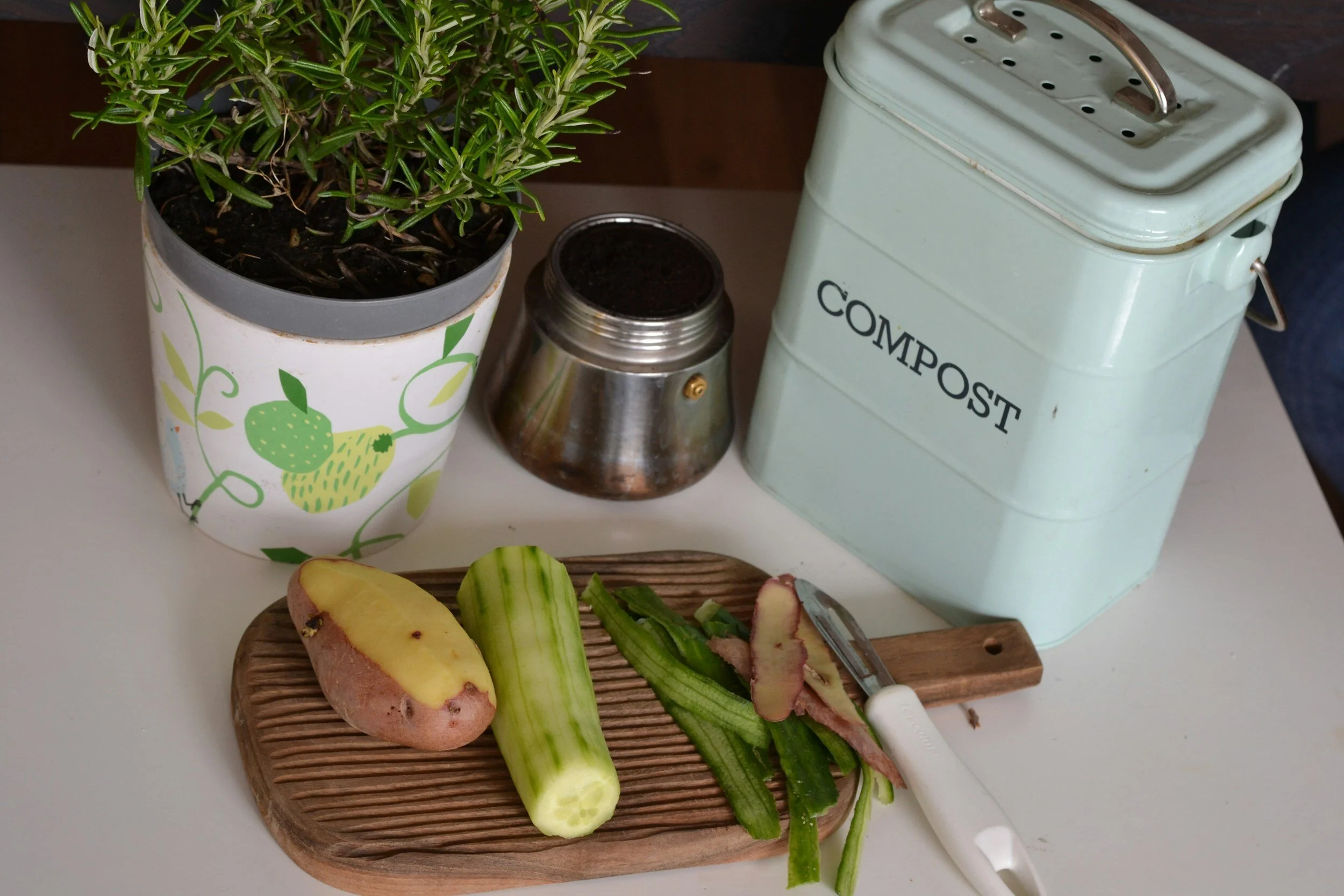
How To Setup The Best Kitchen Compost System.
Title: "Creating a Sustainable Kitchen: Setting Up a Compost Bin and the Benefits of Compost Pickup Services"
Introduction:
In the quest for a more sustainable lifestyle, many individuals are turning to eco-friendly practices within their homes. One such practice is composting, a simple yet impactful way to reduce kitchen waste and contribute to a healthier environment. In this article, we will guide you through the process of setting up a kitchen compost bin and explore the advantages of subscribing to a compost pickup service.
Setting Up a Kitchen Compost Bin:
Choose the Right Container:
Begin by selecting a suitable container for your kitchen compost bin. Options include countertop bins, under-the-sink containers, or larger outdoor bins. Make sure the chosen container is well-ventilated and has a tight-fitting lid to control odors.
Line the Bin:
To make cleaning easier and prevent odors, consider using compostable liners or newspaper to line the bin. This step also aids in maintaining a balance between greens (nitrogen-rich) and browns (carbon-rich) materials.
Collect Green and Brown Materials:
Composting requires a mix of green and brown materials. Green materials include kitchen scraps like fruit and vegetable peels, coffee grounds, and eggshells, while brown materials consist of dry leaves, shredded newspaper, or cardboard. Aim for a balance to promote efficient decomposition.
Avoid Certain Items:
Exclude meat, dairy, oily foods, and pet waste from your compost bin, as they can attract pests and take longer to break down. Additionally, steer clear of materials treated with pesticides or chemicals.
Turn and Maintain:
Regularly turn the compost to ensure proper aeration and accelerate the decomposition process. Add water if the compost becomes too dry, aiming for a moist but not soggy consistency.
Advantages of Compost Pickup Services:
Convenience:
Subscribing to a compost pickup service eliminates the need for managing your compost on-site. Providers often offer scheduled pickups, making it a hassle-free solution for those with limited space or time constraints.
Professional Composting:
Compost pickup services typically have dedicated facilities equipped to handle a wide range of organic waste. These facilities maintain optimal conditions for composting, ensuring a more efficient and effective process compared to home composting.
Expanded Waste Acceptance:
While home composting has limitations on what can be composted, professional composting facilities can often accept a broader range of materials, including meat, dairy, and other compostable items that may be challenging for individuals to process at home.
Reduced Carbon Footprint:
Compost pickup services contribute to reducing the overall carbon footprint by diverting organic waste from landfills. When organic waste breaks down in landfills, it produces methane, a potent greenhouse gas. Composting, whether at home or through a service, helps mitigate this environmental impact.
Conclusion:
Setting up a kitchen compost bin and subscribing to a compost pickup service are powerful steps toward a more sustainable lifestyle. By composting kitchen waste, individuals can significantly reduce their environmental impact, minimize landfill contributions, and contribute to the creation of nutrient-rich soil for gardens and landscaping. Whether you choose to manage your compost at home or opt for a professional pickup service, embracing composting is a meaningful way to contribute to a greener and healthier planet.
Creating a Sustainable Kitchen: Setting Up a Compost Bin and the Benefits of Compost Pickup Services"
In the quest for a more sustainable lifestyle, many individuals are turning to eco-friendly practices within their homes. One such practice is composting, a simple yet impactful way to reduce kitchen waste and contribute to a healthier environment. In this article, we will guide you through the process of setting up a kitchen compost bin and explore the advantages of subscribing to a compost pickup service.
Setting Up a Kitchen Compost Bin:
Choose the Right Container: Begin by selecting a suitable container for your kitchen compost bin. Options include countertop bins, under-the-sink containers, or larger outdoor bins. Make sure the chosen container is well-ventilated and has a tight-fitting lid to control odors.
Line the Bin: To make cleaning easier and prevent odors, consider using compostable liners or newspaper to line the bin. This step also aids in maintaining a balance between greens (nitrogen-rich) and browns (carbon-rich) materials.
Collect Green and Brown Materials: Composting requires a mix of green and brown materials. Green materials include kitchen scraps like fruit and vegetable peels, coffee grounds, and eggshells, while brown materials consist of dry leaves, shredded newspaper, or cardboard. Aim for a balance to promote efficient decomposition.
Avoid Certain Items: Exclude meat, dairy, oily foods, and pet waste from your compost bin, as they can attract pests and take longer to break down. Additionally, steer clear of materials treated with pesticides or chemicals.
Turn and Maintain: Regularly turn the compost to ensure proper aeration and accelerate the decomposition process. Add water if the compost becomes too dry, aiming for a moist but not soggy consistency.
Advantages of Compost Pickup Services:
Convenience: Subscribing to a compost pickup service eliminates the need for managing your compost on-site. Providers often offer scheduled pickups, making it a hassle-free solution for those with limited space or time constraints.
Professional Composting: Compost pickup services typically have dedicated facilities equipped to handle a wide range of organic waste. These facilities maintain optimal conditions for composting, ensuring a more efficient and effective process compared to home composting.
Expanded Waste Acceptance: While home composting has limitations on what can be composted, professional composting facilities can often accept a broader range of materials, including meat, dairy, and other compostable items that may be challenging for individuals to process at home.
Reduced Carbon Footprint: Compost pickup services contribute to reducing the overall carbon footprint by diverting organic waste from landfills. When organic waste breaks down in landfills, it produces methane, a potent greenhouse gas. Composting, whether at home or through a service, helps mitigate this environmental impact.
Conclusion:
Setting up a kitchen compost bin and subscribing to a compost pickup service are powerful steps toward a more sustainable lifestyle. By composting kitchen waste, individuals can significantly reduce their environmental impact, minimize landfill contributions, and contribute to the creation of nutrient-rich soil for gardens and landscaping. Whether you choose to manage your compost at home or opt for a professional pickup service, embracing composting is a meaningful way to contribute to a greener and healthier planet.

Where the Sustainable Future Shall be Headed.
Compostable and reusable products delivered directly to our clients doors. Super sustainable with no extra packaging.
A Manifesto for creating a sustainable Future. In the next five years we see a super sustainable future coming of products packaged in reusable packaging as well as compostable packaging that way you know that your waste is truly helping heal the planet. All of the Products and many more we can deliver directly to our Compost Clients Doors.